
Chinese Foreign Minister Wang Yi on Friday met Pakistan Army Chief Asim Munir and discussed regional security, counter-terrorism and matters of mutual interest.
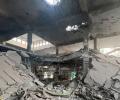
Pakistan is considering creating a new position of 'Commander of Defence Forces' (CDF) to improve coordination and unified command among its military services, according to media reports. The move is part of broader defence reforms and is reportedly influenced by recent conflicts and the evolving nature of modern warfare.
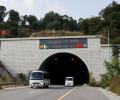
The announcement on expansion of CPEC was made following a meeting among Chinese Foreign Minister Wang Yi, his Pakistani counterpart Ishaq Dar and Afghanistan's Acting Foreign Minister Amir Khan Muttaqi in Beijing, according to a Pakistani readout.

Pakistan is set to host face-to-face talks between the United States and Iran, aiming to solidify a fragile ceasefire and prevent further conflict in West Asia. The discussions will focus on a long-term peace arrangement, including sanctions relief, regional security, and Iran's nuclear program.

Police in Kashmir have arrested 14 drug peddlers across multiple districts as part of a 100-day campaign to eliminate drug use in Jammu and Kashmir. Contraband substances and related paraphernalia were seized during the operations.
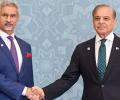
Shehbaz made the comments during a visit to the Kamra air base in the country's Punjab province where he interacted with officers and soldiers involved in the recent military confrontation with India.
US Secretary of State Marco Rubio spoke separately with External Affairs Minister S Jaishankar and Pakistani Deputy Prime Minister and Foreign Minister Ishaq Dar, State Department Spokesperson Tammy Bruce said in a statement early Saturday.

The US Navy seized an Iranian-flagged cargo ship in the Gulf of Oman, escalating tensions as ceasefire talks face uncertainty. The incident raises concerns about the fragile ceasefire and the ongoing blockade of the Strait of Hormuz.

Pakistan launched a retaliatory operation, 'Ghazab lil Haq,' against the Afghan Taliban following alleged border attacks, resulting in reported casualties and destruction of Taliban infrastructure.
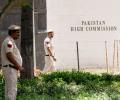
Pakistan is holding a high-level security meeting to formulate a response to India's suspension of the Indus Water Treaty and downgrading of diplomatic ties. The meeting, convened by Prime Minister Shehbaz Sharif, will include the National Security Committee, three services chiefs, and key ministers. The move comes after India blamed Pakistan for a terror attack in Pahalgam, which Pakistan has denied. Diplomatic observers warn that the escalation could further strain relations between the two countries.
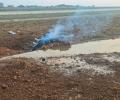
Dar's statement, echoed by another federal minister, came as the Indian and Pakistani militaries targeted each other's installations using missiles in the last more than 12 hours, further escalating the already tense conflict situation.
Pakistan's Deputy Prime Minister and Foreign Minister Ishaq Dar has warned India of a strong response, saying Pakistan will respond to a "brick with a stone" if India takes any action against Pakistan, amid heightened tensions following the April 22 terror attack in Jammu and Kashmir's Pahalgam. Dar alleged that India might have staged the Pahalgam attack to abolish the Indus Waters Treaty (IWT) and warned that any attempt by India to interfere with the treaty would be considered an act of war. He also said that Pakistan had no involvement in the Pahalgam incident and is getting support from countries like Saudi Arabia, China, the United Arab Emirates, the United Kingdom, Kuwait, Bahrain, and Hungary.
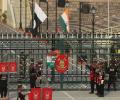
The Army further made it clear that the continuation of a break in hostilities, as decided in the DGMOs interaction of May 12, has no expiry date to it.

Saudi Arabia and Pakistan have signed a 'Strategic Mutual Defence Agreement', pledging that any aggression against either nation would be treated as an attack on both.
Pakistan's Foreign Minister Ishaq Dar has called for a 'composite dialogue' with India to address the contentious issues between the two sides.
Since the Pahalgam terrorist attack, China, Pakistan's "ironclad ally", while condemning it, has called for restraint, besides a fair and swift investigation into the attack.

'As result, Netanyahu 'convinced' Trump to go to war with the help of overoptimistic Israeli intelligence assessments, essentially explaining to him that they only need to bomb Iran for 3-4 days, and the regime would then collapse.' 'Rather unsurprisingly, Netanyahu is ever since blaming his own intel service for the entire operation failing.'

Pakistan launched fresh air strikes targeting terrorist hideouts in Afghanistan, killing several people, including three cricketers, casting a shadow over the expected talks in Doha amid a fragile ceasefire that had temporarily halted hostilities between the two sides.

Pakistan's Army Chief Field Marshal Asim Munir met with Chinese President Xi Jinping, along with Pakistani Prime Minister Shehbaz Sharif, to discuss bilateral and regional cooperation. The meeting occurred during Sharif's visit to China for the Shanghai Cooperation Organisation (SCO) summit.
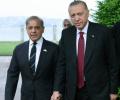
Pakistan Prime Minister Shehbaz Sharif met with Turkish President Recep Tayyip Erdogan to review bilateral relations and reaffirm their commitment to strengthening their strategic partnership. The two leaders discussed joint ventures and enhanced bilateral investment in key sectors, aiming to achieve a $5 billion annual bilateral trade target. They also expressed gratitude for mutual support during recent tensions with India. The meeting was described as "warm and most cordial," highlighting the deep-rooted historical ties between Pakistan and Turkey.
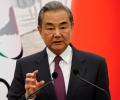
China on Tuesday called for a 'comprehensive and lasting ceasefire' between India and Pakistan, urging both countries to properly handle their differences through dialogue.
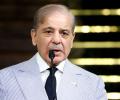
United States President Donald Trump is set to engage in high-stakes bilateral meetings on Thursday, including a closed-door session with Pakistan's Prime Minister Shehbaz Sharif in the Oval Office, according to Trump's public schedule released by the White House.
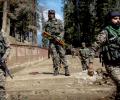
China hopes both sides will remain restrained, move toward each other, and work together to de-escalate the situation.
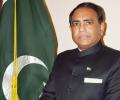
Pakistan's ambassador to Turkmenistan, K K Wagan, was deported from the United States after being denied entry at Los Angeles airport. The incident has sparked concerns about diplomatic protocol and the nature of the US authorities' decision. Wagan, who holds a valid US visa, was forced to return to his last port of departure. The Foreign Office confirmed the envoy had gone to the US on a private visit and is investigating the matter. It remains unclear what specific concerns triggered the deportation, but sources suggest the US immigration system flagged Wagan over controversial visa references. The incident has been communicated to Pakistan's Foreign Minister Ishaq Dar and Foreign Secretary Aamna Baloch, and the Foreign Ministry has directed its Consulate in Los Angeles to investigate.
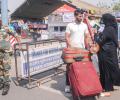
United States Charge d'Affaires Natalie Baker on Wednesday met Deputy Prime Minister and Foreign Minister Ishaq Dar as part of efforts to de-escalate tensions with India following the Pahalgam terror attack on April 22 in which 26 people were killed.
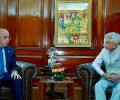
As tensions escalated between India and Pakistan following the deadly Pahalgam terror attack, Iran reached out to both countries, urging de-escalation. Saudi Arabia also expressed concern, with its foreign minister engaging in phone conversations with his Indian and Pakistani counterparts. Iran's foreign minister, Seyed Abbas Araghchi, emphasized the importance of bilateral relations, stating Tehran's willingness to "forge greater understanding" at this critical time. Saudi Arabia's foreign minister, Faisal bin Farhan Al Saud, spoke with both India's External Affairs Minister S Jaishankar and Pakistan's Foreign Minister Mohammad Ishaq Dar. Amidst heightened tensions, India has taken a series of punitive measures against Pakistan, including suspending the Indus Waters Treaty and downgrading diplomatic ties. Pakistan responded by shutting its airspace to Indian airliners and suspending all trade. Both countries exchanged warnings, with Pakistan emphasizing its commitment to "respond firmly to any aggression."
External affairs ministry spokesperson Randhir Jaiswal said India will keep the IWT in abeyance until Pakistan "credibly and irrevocably" abjures its support for cross-border terrorism.
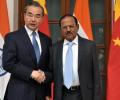
Wang also condemned the April 22 terror attack in Jammu and Kashmir's Pahalgam, which had cross-border linkages and triggered the worst fighting between India and Pakistan in years.
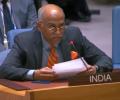
India's Permanent Representative to the UN, Ambassador Parvathaneni Harish, has sharply criticized Pakistan, calling it the "global epicenter of terrorism" and accusing it of providing state support to cross-border terrorism. Harish's remarks came in response to Pakistan's Deputy Prime Minister and Minister of Foreign Affairs Mohammed Ishaq Dar's comments on Jammu and Kashmir during a UN Security Council meeting. India highlighted that Pakistan harbors over 20 UN-listed terrorist entities and has a history of supporting groups like Jaish-e-Mohammed and Harkat Ul Mujahidin. India also emphasized that Jammu and Kashmir is an integral part of India and that Pakistan's misinformation campaign does not change the reality on the ground.
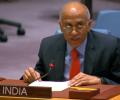
India's Permanent Representative to the UN Ambassador Parvathaneni Harish said that the Indian sub-continent offers a "stark contrast" in terms of progress, prosperity and development models.
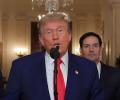
The Pakistan government, as well as the country's military establishment, have come under severe criticism from netizens on social media for recommending United States President Donald Trump for the Nobel Peace Prize.
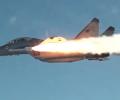
The Directors General of Military Operations of India and Pakistan firmed up the arrangement on stopping military actions on May 10 after four days of fierce offensives between the two sides that triggered fears of a wider conflict.

Chinese Ambassador to Pakistan Jiang Zaidong urged that the government should launch a crackdown against all anti-China terrorist groups after two deadly attacks took place in Pakistan within only six months, The Express Tribune reported.

The LPG squeeze on India's restaurant sector is the quotidian face of a deeper crisis.
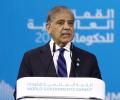
Prime Minister Shehbaz Sharif thanked US President Donald Trump for acknowledging Pakistan's role in counter-terrorism efforts after the country arrested a wanted terrorist. Trump thanked the Pakistani government for helping arrest "Mohammad Shareefullah", also known as Jafar, who supported and conducted activities on behalf of ISIS-K in support of multiple lethal attacks, including the Abbey Gate attack in 2021. Sharif said the terrorist, an Afghan national, had been apprehended in an operation along the border with Afghanistan.

Pakistan's ambassador to Russia, Muhammad Khalid Jamali, has warned that Pakistan will respond with "full spectrum of force", including nuclear, if it is attacked or its vital water flow is disrupted. The warning comes amid heightened tensions between Pakistan and India following a terrorist attack in Jammu and Kashmir. Jamali also reiterated Pakistan's stance on the Indus Water Treaty, saying any attempt to stop or divert water flow would be considered an act of war. He urged de-escalation, emphasizing the potential danger given both countries possess nuclear weapons. Jamali further called for a neutral investigation into the Kashmir attack, suggesting the involvement of China and Russia. He also highlighted the need to address the root causes of the conflict, pointing to the unresolved Kashmir issue and its potential for resentment.
It is also the first time that TRF has been mentioned in any UN document. This marks the first mention of the LeT and any other Pakistan-based terror group in the report since 2019.

Pakistan has raised a 25,000-strong special force and put in place extensive measures to protect and manage its strategic assets, including its nuclear arsenal, Finance Minister Ishaq Dar has said.
Dar also said Pakistan views Russia as an important player in the West, South and Central Asia, and strengthening mutually beneficial cooperation with Russia remains an important priority for Pakistan's foreign policy.
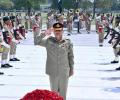
Sections in the US State Department and Pentagon have always felt more comfortable dealing with all powerful Pakistani generals instead of elected civilians, points out Rana Banerji, who headed the Pakistan desk at RA&W.
